A rare extra-large mid-19th-century antique Puglian cammauttu, a traditional Southern Italian farmhouse vessel used for storing and preserving olives in brine. Standing 62 cm tall, this imposing hand-thrown ceramic pot features four substantial handles and a distinctive partial yellow glaze around the upper opening.
The four handles were an important practical feature, allowing the heavy vessel to be moved more easily and tilted when emptying its contents. The yellow glaze was concentrated around the rim and handles, where spills and drips were most likely to occur. Leaving the remainder of the vessel unglazed was both practical and economical, reducing the amount of glaze required during production.
The substantial hand-thrown body has developed a wonderfully authentic patina through generations of everyday use. Variations in the surface, glaze and terracotta reveal the individual character of this historic piece of Southern Italian domestic pottery.
Today, this exceptional cammauttu makes a dramatic decorative vessel for a large interior, terrace or garden. Its generous scale and unusual four-handle form create a strong sculptural presence, while the warm yellow glaze adds a subtle Mediterranean accent.
Found in Lecce, the Baroque capital of Salento, this one-of-a-kind vessel is a beautiful example of the traditional farmhouse pottery discovered by Rivesto in Puglia.
Pair it with the matching green-glazed four-handle cammauttu shown in the photographs for an especially striking arrangement.
Details
Period: Mid-1800s
Origin: Puglia, Southern Italy
Found in: Lecce, Salento, Puglia
Material: Hand-thrown terracotta / ceramic
Traditional form: Cammauttu
Original use: Storing and preserving olives in brine
Glaze: Partial yellow glaze
Features: Four handles and extra-large form
Dimensions: H62 × W38 × D38 cm
As with all Rivesto antique ceramics, this piece is perfectly imperfect. Cracks, chips, discolouration and other signs of age may be present and form part of its authentic character and history. Please note that colours may vary slightly from screen to screen.
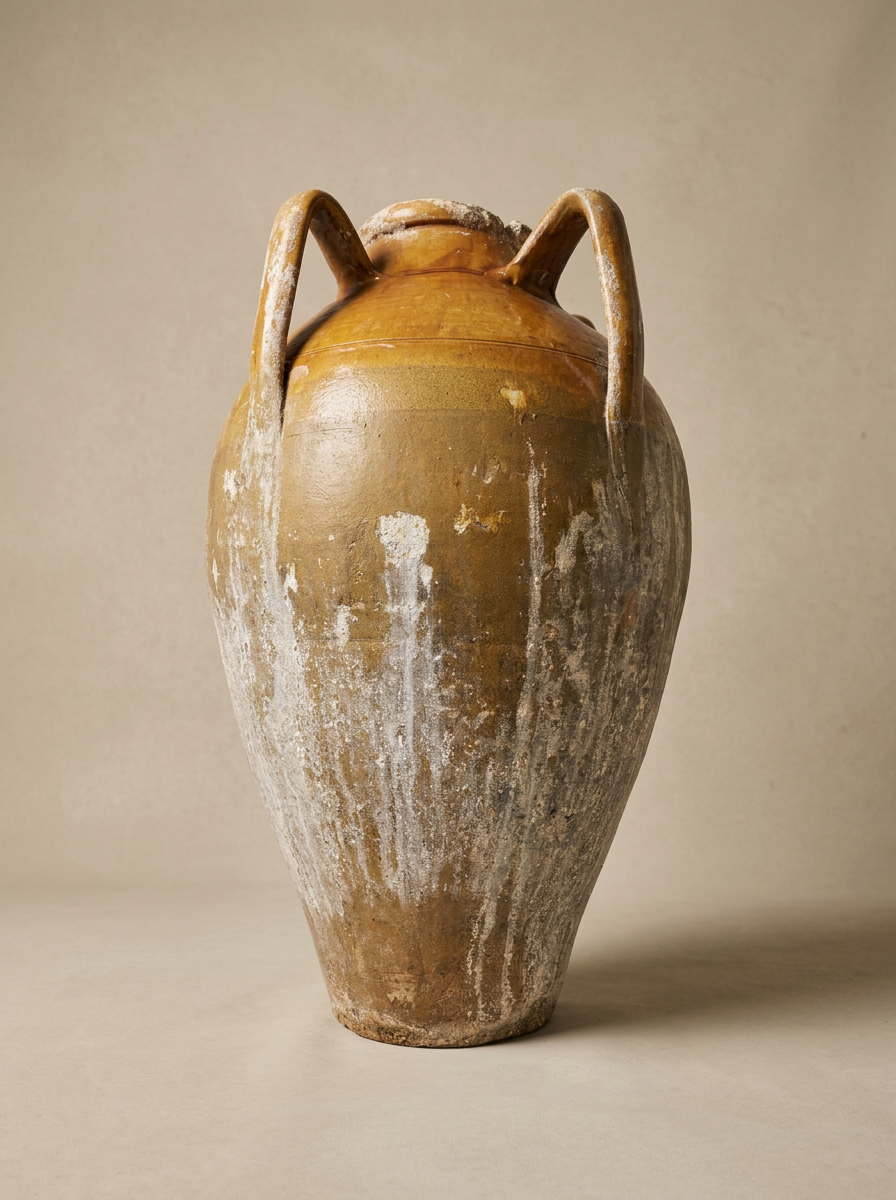 Image 1 of 10
 Image 2 of 10
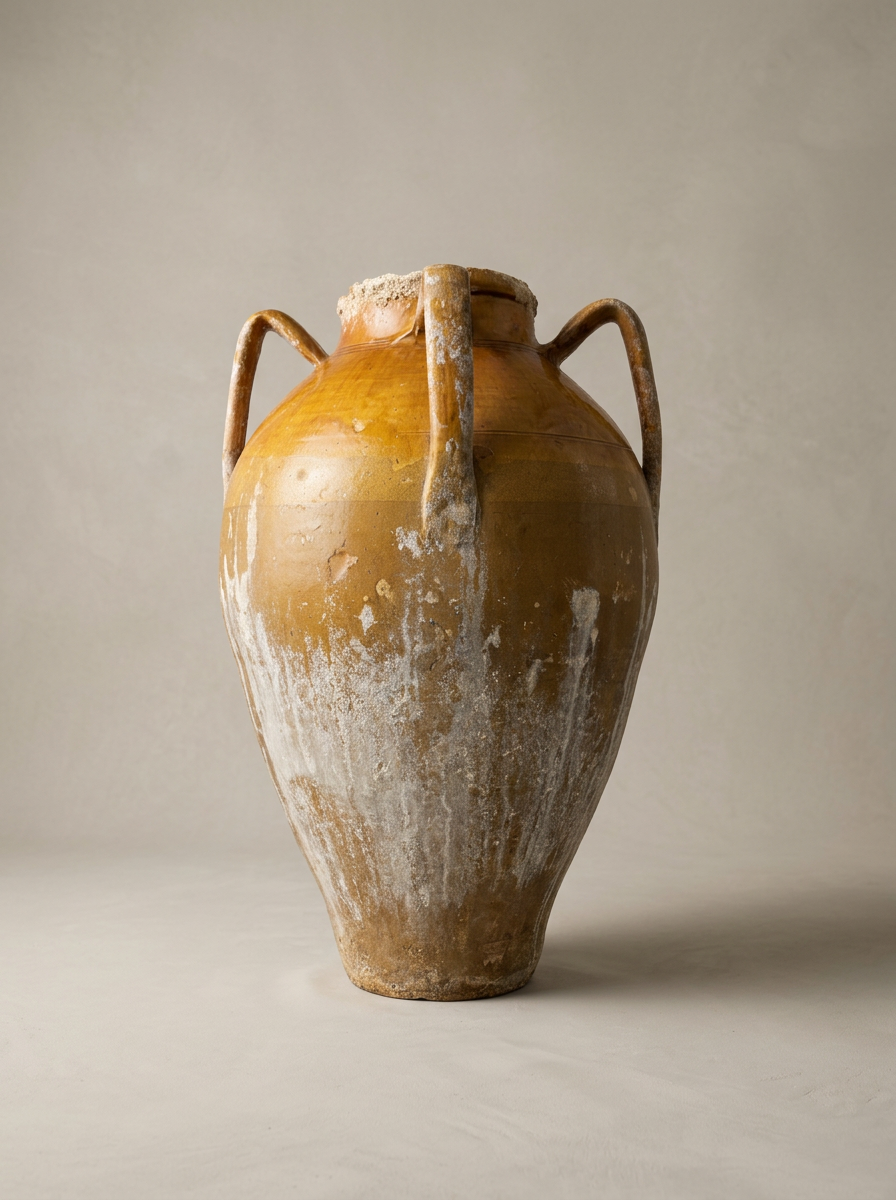 Image 3 of 10
 Image 4 of 10
 Image 5 of 10
 Image 6 of 10
 Image 7 of 10
 Image 8 of 10
 Image 9 of 10
 Image 10 of 10